What I find hard to accept is dismissing something as unscientific without a second thought.
Denial carries a burden of proof too
Science as we have it today is not complete, and there is an enormous amount still ahead of it. To deny something, you have to prove beyond doubt that it cannot be. What cannot be proved should not be denied — that is how I see it.
Describe a jet aircraft five hundred years ago
Go back five hundred years, describe a lump of metal that carries people through the sky, and most people would answer that something that heavy could never fly. What passes for common sense is the common sense of its own era.
So I do not rule out craft that fly by countering gravity, and I do not rule out time machines or time travel. Ruling out a possibility can amount to ruling out the future.
Belief carries the same burden
That said, one thing does puzzle me: the flat-earth position. To hold it, you have to explain how GPS, which is working all around us right now, would function on a flat earth. I have not come across anyone who sets that out.
The burden of proof falls on the side that denies and the side that affirms, in equal measure.
Something that came out of not ruling it out
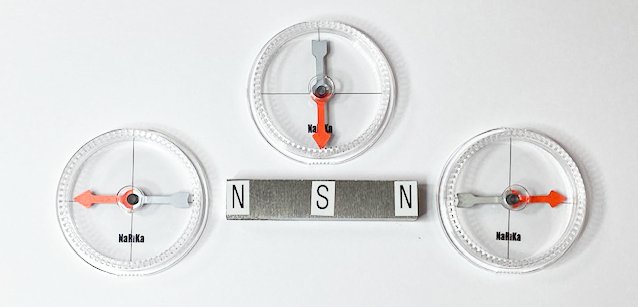
We make what we call a quasi-monopole magnet. An ordinary magnet carries a north pole and a south pole as a pair; in ours, both ends are north with a weak south in the middle, or both ends are south with a weak north in the middle. It is magnetised with a specially designed coil, and we designed and built the magnetising equipment ourselves. We supply them for research and experimental use.
Had I stopped at "the poles of a magnet come in pairs", it would never have occurred to me to try. We keep developing products in the belief that not ruling things out is what produces new ones.
In summary
- Do not deny what you cannot disprove. The burden of proof falls on denial as well
- Affirmation carries the same burden. Neither side gets to skip it